
A familiar position
Elequo by OnlineFuels runs vehicle and charging registration services. Fast-growing, a skilled but stretched engineering team, and a rising number of users. The engineers building new features are the only people who can completely test the old ones. Every hour spent manually testing regressions is an hour not spent shipping, so testing gets compressed into whatever time is left before a release, which is never enough.
In practice, the team could rigorously validate only 10 to 15 user journeys before each deployment. Product growth kept covering far more ground than that.
What Elequo needed
Registrations arrive through several branded sites, all feeding into a single shared admin portal. A registration can be for a vehicle or a charging location, submitted by a private person or an organisation, and vehicles span multiple classes. Each choice is a separate path, multiply them together and the number of possible journeys climbs fast.
Any one path can break after a code change. And a broken registration flow is not a cosmetic bug. It is a customer who cannot sign up, and revenue that does not arrive.
Why manual testing could not keep up
Manual testing tends to fail at scale, but it does so quietly. It doesn’t crash spectacularly. Under deadline pressure, It just gets trimmed and neglected.
Under crunch, as scope narrows, end-to-end testing usually confirms that a page loads rather than that a real task can be finished from start to finish. The gap between “the site is up” and “a customer can actually register an organisation’s vehicle in Austria, with all compliance steps covered” is exactly where regressions hide.
Elequo needed a way to check the whole surface area after every deployment, consistently and quickly, without pulling engineers off work regularly.
Why Klarent works for them
With Klarent, instead of writing and maintaining test code for every scenario, the team describes each test in plain English, readable and reviewable by anyone.
No Onboarding Lag: Klarent’s service team creates and migrates the initial test scenarios for every client, eliminating the gap between getting started and getting up to speed. As the client team familiarizes itself with the platform, our team kicks things off in close sync with client needs.
Within 2 to 3 days from kickoff, the first test suites are live, stabilized, and delivering beyond expectations.
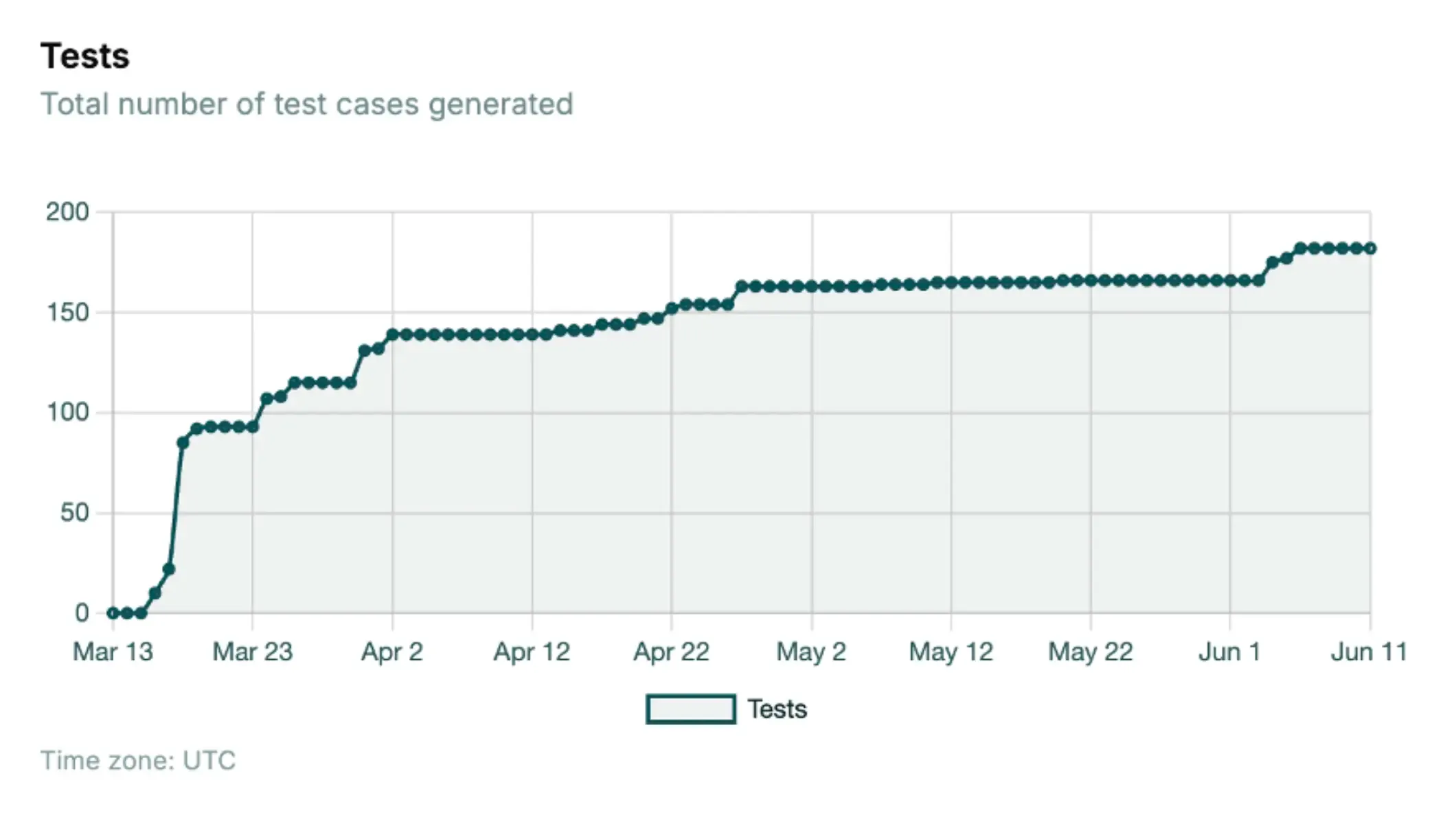
Scaling at velocity: The test count grows quickly, while executing, stabilizing, and refining existing ones with iterative feedback. With a frame of reference and hands-on experience, the client team soon begins creating their own tests with great success.
What the agent leaves behind: For teams with a limited QA function, this is what matters most. Every run produces fresh screenshots captured at each step, so every action can be seen rather than assumed, alongside detailed logs, traces, and the exact sequence of steps.
This is what builds trust. Everything is verifiable. When something fails, the team isn’t handed a red cross and left to guess. They get the screen exactly as it looked when it broke, the steps that led there, and a plain-language note on what went wrong.
The biggest win has been the ability to quickly convert our existing manual test cases into automated workflows with no overhead. This has helped us transition to a more scalable QA process and establish a successful long term testing strategy.
Marc Noy
CEO
What Klarent does for Elequo
Today, test-suites cover Elequo’s critical journeys:
Registration flows across 8 customer sites, with person and organisation flows handled separately, and multiple vehicle classes managed through variables so a single test runs across many configurations.
Admin portal data management, everything from validating, declining, deleting, and moving registrations; renewing them; creating them manually.
Admin database validation, adding details, changing types, and testing data exports and migrations end to end.
A regression caught before it shipped
When Elequo pushes a change to the vehicle registration flow, Klarent’s agent goes through it exactly as a customer would. If a button is greyed out when it shouldn’t be, a required field has gone missing, or a step fails silently, the agent flags it immediately, with screenshots and the step trail already attached.
Nobody has to chase down and reproduce the issue from scratch, the evidence is already there. A problem that came when a customer complained now surfaces minutes after the deployment.
The results
Klarent now hosts more than 130 automated tests for Elequo, covering the critical journeys across both markets. The full coverage now completes in a few minutes.
Once a test exists, it costs no human effort to run again. The team runs the suite before a release, after a hotfix, or on a schedule, as often as they like. It can be triggered whole or narrowed to the one area that just changed. The team now tests 4X more than they did prior to Klarent.
Because of how tests are written, expanding them doesn’t require a QA specialist. Every new site, market, or registration type is simply more journeys to describe and add.
Klarent is best suited for teams looking to scale QA without increasing manual effort. The greatest value is realized over time by teams that invest in automation as a long term capability, rather than treating it as a quick fix.
Marc Noy
CEO
QA that works at scale
For a fast-growing company, testing SaaS applications should be continuous, not occasional. Autonomous QA doesn’t make risk disappear overnight, but it mitigates it at a scale and frequency that manual testing never could.
For Elequo, that consistency was the difference between shipping with confidence and shipping with anxiety.
